
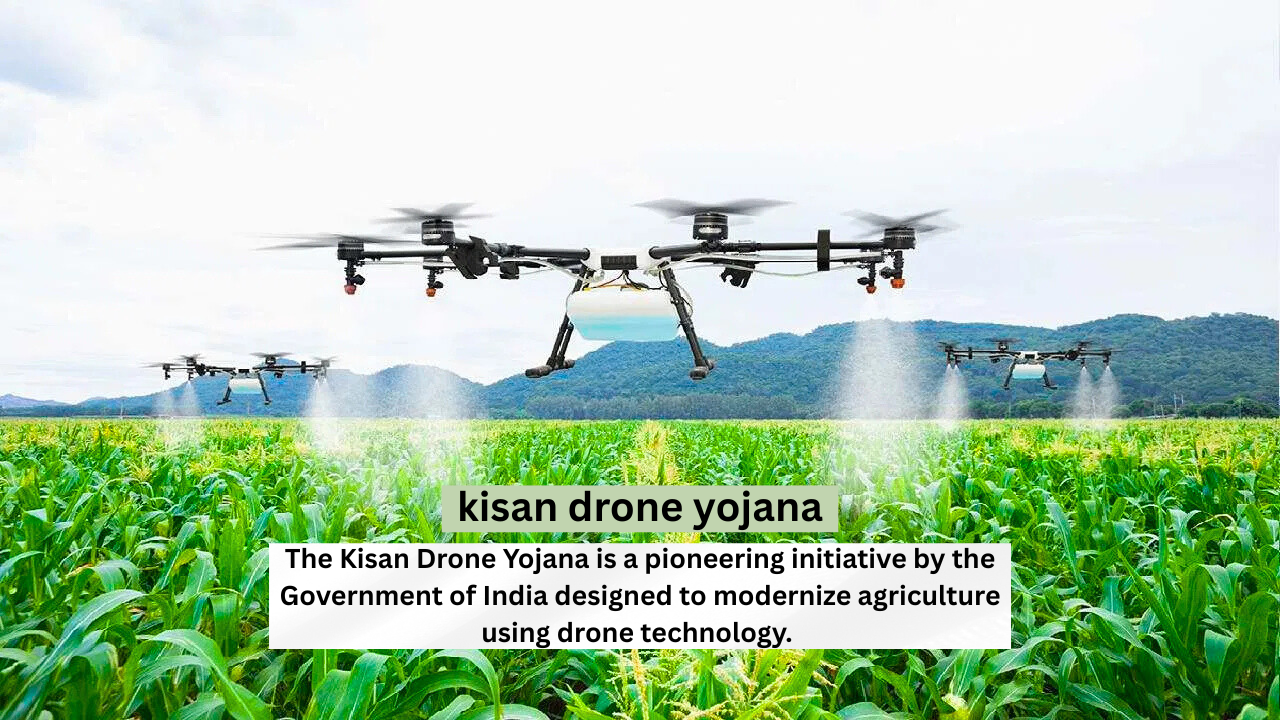
The Kisan Drone Yojana is a pioneering initiative by the Government of India designed to modernize agriculture using drone technology. Launched under the Sub-Mission on Agricultural Mechanization (SMAM), this scheme aims to make farming more efficient, precise, and environmentally friendly. It allows farmers, farmer producer organizations (FPOs), custom hiring centers (CHCs), and women self-help groups (SHGs) to access drones with financial support and proper training. The program is part of a broader effort to encourage smart farming practices, reduce labor costs, and increase crop productivity.
Objective of the Scheme
The primary objective of the Kisan Drone Yojana is to promote the use of agricultural drones for spraying pesticides, fertilizers, and nano-urea, as well as for crop health monitoring and field surveying. Farmers often face challenges such as labor shortages, high input costs, and pest management difficulties. With drones, they can achieve precise application of chemicals, reducing wastage and saving both time and money. The technology also helps in monitoring crop health in real time, detecting disease early, and assessing soil conditions more efficiently than traditional methods.
Financial Assistance and Subsidy
Financial assistance under the scheme is a major attraction. Small and marginal farmers, SC/ST farmers, women, and farmers from northeastern states can receive up to 50% subsidy, with a maximum limit of ₹5 lakh per drone. Other individual farmers can get up to 40% subsidy, capped at ₹4 lakh. Custom Hiring Centres and agriculture graduates establishing CHCs also receive substantial financial support ranging from 40% to 50%, depending on the category. Institutions such as KVKs and ICAR research centers are eligible for 100% assistance for demonstration purposes. The Namo Drone Didi sub-scheme offers women SHGs up to 80% central financial assistance, ensuring that female entrepreneurs can benefit from drone technology.
| Feature | Details |
|---|---|
| Name | Kisan Drone Yojana |
| Launched By | Government of India |
| Launch Year | 2022-2023 (under SMAM) |
| Objective | To promote drone use in agriculture for spraying, monitoring, and mapping crops |
| Eligible Applicants | Individual farmers, SC/ST farmers, women, FPOs, SHGs, CHCs, KVKs, and institutions |
| Subsidy Offered | 40% to 100% depending on category (up to ₹5-10 lakh per drone) |
| Training | Free or subsidized training on drone operation, safety, maintenance, and crop-specific spraying |
| Drone Package Includes | Drone with spraying assembly, batteries, charger, camera, and monitoring tools |
| Special Schemes | Namo Drone Didi (for women SHGs, up to 80% subsidy) |
| Main Benefits | Precision spraying, labor saving, crop health monitoring, reduced chemical usage, women empowerment, rural employment |
| Challenges | Pilot license requirement, maintenance costs, awareness among farmers, demand for service viability |
| Impact | Modernizes agriculture, supports domestic drone industry, empowers women and small farmers |
Training and Skill Development
Training is an essential part of the program, as operating Kisan Drone Yojana requires skill and knowledge. Farmers and SHG members are offered 5–10 days of training at recognized centers such as Krishi Vigyan Kendras (KVKs) or agricultural colleges. This training covers drone operation, safety, maintenance, and crop-specific applications. Women participating under the Drone Didi scheme undergo extended training, combining flying skills with crop management knowledge. Additionally, new drone operators and technicians are being trained through collaborations between private and government agencies, creating rural employment opportunities.
Drone Kit Details
When farmers receive Kisan Drone Yojana under the scheme, they receive a complete package, including the drone with spraying assembly, batteries, charger, camera for field monitoring, and essential tools such as pH meters and anemometers. This allows them to not only fly drones but also use them effectively for precision spraying, mapping, and monitoring. The inclusion of these accessories ensures that drones can be applied meaningfully to various crop types and field conditions.
Benefits of Kisan Drone Yojana
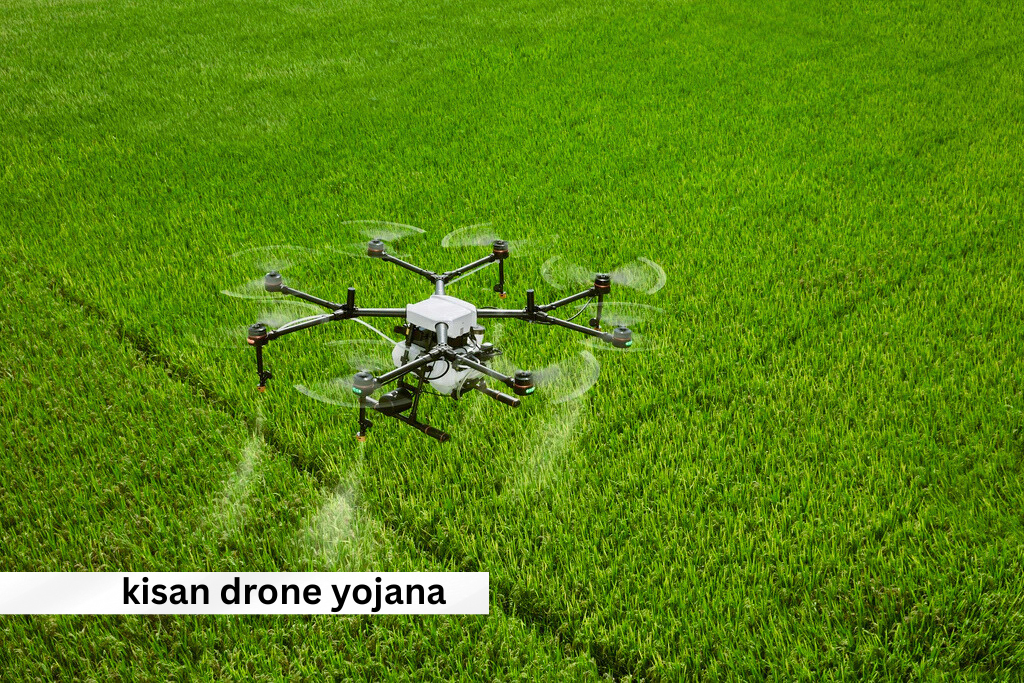
The benefits ofKisan Drone Yojana are multifaceted. Drones promote precision agriculture, allowing accurate application of pesticides and fertilizers, which reduces chemical usage and environmental impact. Labor-intensive processes such as spraying are completed much faster and more safely, reducing the physical burden on farmers. With on-board cameras and sensors, drones also enable early detection of crop stress, disease, or soil issues. The scheme empowers women and marginal farmers by enabling them to run drone service businesses, generating additional income. Furthermore, encouraging drone use supports domestic drone manufacturing and strengthens the agricultural technology ecosystem in India.
Challenges and Considerations
Despite its many advantages, the scheme has challenges. Obtaining a certified drone pilot license is mandatory, and regulatory compliance is essential for safe operations. Maintenance costs, including batteries, spare parts, and repairs, may be significant, and some farmers may face difficulties in affording even the subsidized cost. Awareness remains a critical factor, as many small farmers may be hesitant to adopt new technology. The success of service models such as CHCs or SHGs depends on sufficient demand in their areas to make drone operations financially viable.
Recent Developments
The Kisan Drone Yojana has already made noticeable progress. Significant funds have been allocated for implementation, and thousands of drones are expected to be distributed under both the central program and the Namo Drone Didi scheme. States like Andhra Pradesh and Maharashtra are actively promoting drone adoption by providing subsidized drones and training to local farmers. These steps indicate the government’s commitment to integrating drone technology into mainstream agriculture.
How to Apply
Applying for the scheme involves checking eligibility based on the category of the applicant, preparing required documents such as Aadhaar, land records, and bank accounts, and contacting local KVKs or agriculture departments for guidance. After completing the necessary training, farmers or SHGs can receive the drone package and begin using it on their farms or offering drone services to nearby farms. This combination of technology, training, and financial support ensures that even small and marginal farmers can benefit from advanced agricultural practices.
Human Impact
The Kisan Drone Yojana represents a human-centered approach to agricultural modernization. For example, a small farmer who previously spent hours manually spraying pesticides can now operate a drone, completing the work quickly and accurately. Women SHG members operating drones for neighboring farms not only earn income but also gain recognition and confidence in their communities. Such stories highlight the transformative impact of combining traditional farming knowledge with advanced technology.
Final Thoughts
The Kisan Drone Yojana is a forward-looking initiative that addresses key challenges in Indian agriculture. By promoting precision farming, reducing labor costs, supporting women and marginalized farmers, and fostering a domestic drone ecosystem, the scheme has the potential to transform the agricultural sector. With continued government support, effective implementation, and strong outreach efforts, drones could become an indispensable tool for farmers, leading to higher productivity, sustainability, and empowerment across rural India.
FAQs
Q: What is Kisan Drone Yojana?
A: Kisan Drone Yojana is a government initiative that helps farmers use drones for spraying, monitoring, and mapping crops, making farming faster, more precise, and eco-friendly.
Q: Who is eligible under Kisan Drone Yojana?
A: Individual farmers, SC/ST farmers, women, FPOs, SHGs, CHCs, and institutions like KVKs are eligible to apply under Kisan Drone Yojana.
Q: How much subsidy is provided by Kisan Drone Yojana?
A: Kisan Drone Yojana provides subsidies ranging from 40% to 100% depending on the category, with higher support for small/marginal farmers and women SHGs.
Q: Do farmers get training under Kisan Drone Yojana?
A: Yes, Kisan Drone Yojana offers free or subsidized training on drone operation, safety, maintenance, and crop-specific spraying techniques.
Q: What are the main benefits of Kisan Drone Yojana?
A: Kisan Drone Yojana helps farmers save labor and time, ensures precise spraying, reduces chemical usage, monitors crop health, and empowers women and small farmers economically.
