

When you hold a piece of vintage Emile Henry bakeware in your hands, you’re clasping a slice of culinary history. These glazed ceramic stoneware pieces, once ordinary tools in French kitchens, have become cherished vintage treasures among home cooks and collectors alike. From rustic gratin dishes to classic pie pans, Emile Henry bakeware represents craftsmanship, tradition, and durability that have endured for generations.
A Legacy Born in Burgundy
The story begins in 1850, in the small town of Marcigny in Burgundy, France, when potter Jacques Henry founded the company that would become Emile Henry. At that time, Henry’s workshop used simple tools — manual wheels and wood‑fired kilns — to produce everyday ceramic kitchen items such as pots, jugs, casseroles, and dishes.
Over the decades, the company evolved as industrial changes transformed pottery production. Coal‑powered kilns gave way to gas and electric firing, and mechanical wheels replaced manual ones. The business grew steadily, gaining a loyal customer base — particularly in Paris — thanks to the dependable quality of its ceramics.
Emile Henry: The Man Behind the Name
While many people assume Emile Henry was a single craftsman with personal fame, in reality he was part of a multi‑generational family business dedicated to ceramic craftsmanship. Born in 1885, Emile took over the company in 1922, just after World War I, and worked hard to keep the pottery competitive amid rising pressure from metal cookware manufacturers. Despite the tough market, he maintained steady demand, with Paris accounting for nearly 40 % of sales at one point.
After Emile’s death in 1950, leadership passed to Maurice Henry, who further expanded production and shifted the company’s focus exclusively toward glazed pottery for culinary use. By the early 1980s, horticultural ceramics were phased out so that all efforts concentrated on tools designed for the kitchen — the precursors to what are now prized vintage bakeware items.
| Attribute | Details |
|---|---|
| Name | Emile Henry |
| Type | Ceramic Bakeware / Stoneware |
| Origin | Marcigny, Burgundy, France |
| Founded | 1850 |
| Founder | Jacques Henry |
| Notable Figure | Emile Henry (1885–1950), family member who expanded the company) |
| Materials | High-quality Burgundy clay, natural glazes (Ceradon®) |
| Product Types | Casserole dishes, gratin pans, pie plates, loaf pans, ramekins |
| Vintage Definition | Pieces produced several decades ago (before 1990s), collectible due to age, design, and craftsmanship |
| Key Features | Freezer-to-oven safe, dishwasher safe, scratch & chip-resistant, thermal shock resistant, food-safe glazes |
| Production | Hand-finished, high-temperature fired stoneware in France |
| Current Management | Jean-Baptiste Henry (6th generation of Henry family) |
| Collectibility | Rare colors, discontinued shapes, early designs from 20th century |
| Social Media / Website | emilehenryusa.com |
| Legacy | Nearly 180 years of family-run ceramic craftsmanship, blending tradition and modern kitchen functionality |
The Magic of Burgundy Clay
One of the most fascinating aspects of Emile Henry stoneware is the unique clay used in production. The clay is sourced directly from Burgundy’s mineral‑rich soil, the same terroir that produces world‑renowned French wines. This material imparts exceptional heat distribution, retention, and resistance to thermal shock, making it ideal for both baking and slow cooking.
The proprietary manufacturing process, often referred to as Ceradon®, involves molding the raw clay, hand‑finishing each piece, applying a natural glaze, and firing at extremely high temperatures. This not only vitrifies the clay — making it hard, durable, and non‑porous — but also creates a vibrant, elegant finish that stands up to regular use.
Vintage Bakeware: What It Is and Why It Matters
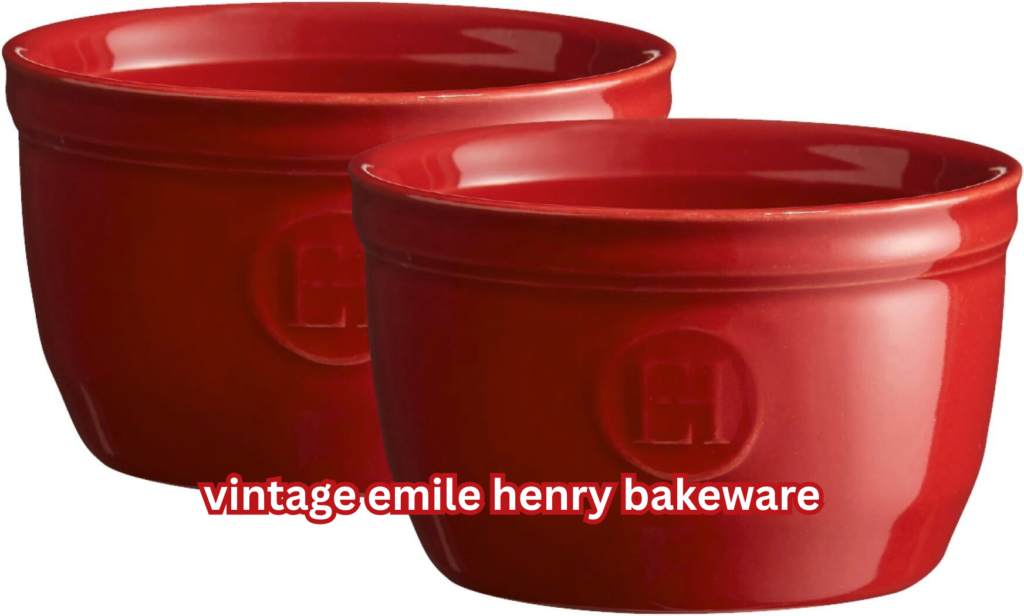
What exactly makes a piece of Emile Henry bakeware vintage? In essence, it’s any item produced in the past — often several decades ago — using the company’s classic methods before modern production changes. These include casserole dishes, gratin pans, pie plates, loaf pans, and more, many of which now appear in online marketplaces and auctions.
Vintage pieces often carry unique signs of use and age, such as slight glaze crazing, variations in color, or manufacturing irregularities. These marks are not flaws; rather, they are part of the piece’s story and charm. They remind us that these items were once integral tools in real kitchens, helping nourish families through everyday meals.
Technical Qualities That Stand the Test of Time
Vintage Emile Henry bakeware isn’t just nostalgic; it’s genuinely functional. Thanks to the properties of Burgundy clay and the robust glaze, these pieces are:
- Freezer‑to‑oven safe — thermal shock resistance allows direct transfers from cold to hot environments.
- Dishwasher safe, and they resist stains, odors, and food residues.
- Scratch and chip‑resistant, even with frequent use.
- Food‑safe, with glazes free of lead, cadmium, and other harmful elements.
This combination of durability and beauty explains why vintage Emile Henry bakeware remains popular with collectors and cooks alike, even decades after its creation.
Collectibility and Value
Vintage Emile Henry bakeware has become particularly sought after on sites like Etsy and specialty vintage shops. Listings often include:
- Oval casserole dishes in traditional French colors.
- Pie and quiche pans with distinctive fluted edges.
- Colorful rectangular gratin dishes with rustic appeal.
Prices vary widely based on age, condition, and rarity — some items sell for under $30, while rarer or larger pieces can fetch well over $100. Collectors often look for unique colors or uncommon forms that no longer appear in modern catalogs.
The Emile Henry Family Today
Unlike disposable kitchenware brands of the modern era, Emile Henry remains a family‑operated business rooted in its French heritage. Today, Jean‑Baptiste Henry, part of the sixth generation of the Henry family, leads the company — proudly continuing traditions that span nearly 180 years.
Under this leadership, Emile Henry still manufactures its products in Marcigny, has achieved international quality certifications, and continues to innovate while preserving classic techniques. This blend of tradition and modernity makes both vintage and contemporary pieces desirable.
Using Vintage Emile Henry Bakeware Today
One of the best things about vintage Emile Henry bakeware is that it’s not just decorative — it’s made to be used:
- Bake gratins, lasagna, and casseroles.
- Serve dishes straight from the oven to the table with panache.
- Enjoy the rustic look that complements farmhouse or country kitchen aesthetics.
Just remember that some vintage pieces may have subtle signs of wear — glaze crazing or minor marks — so inspect them before use and avoid pieces with severe cracks that could compromise safety.
Conclusion: A Legacy Worth Loving
Vintage Emile Henry bakeware is more than kitchen equipment — it’s a piece of culinary heritage that stands as a testament to craftsmanship, tradition, and enduring quality. From its origins in 1850 Burgundy to today’s passionate collectors and cooks around the world, Emile Henry represents a bridge between past and present in the world of bakeware. Whether you use a vintage piece for baking or display it as a classic collectible, it carries with it the story of French ceramic artistry and family legacy that few brands can rival.
FAQs
Q: What is vintage Emile Henry bakeware?
A: Vintage Emile Henry bakeware is older French ceramic cookware known for durability and style.
Q: Is vintage Emile Henry bakeware safe to use in the oven?
A: Yes, vintage Emile Henry bakeware can go from freezer to oven if there are no cracks.
Q: How do I identify genuine vintage Emile Henry bakeware?
A: Check for the embossed “Emile Henry France” stamp and natural glaze variations.
Q: Why is vintage Emile Henry bakeware collectible?
A: Collectors seek vintage Emile Henry bakeware for rare colors and classic French craftsmanship.
Q: How should I care for vintage Emile Henry bakeware?
A: Hand wash and avoid sudden temperature changes to keep vintage Emile Henry bakeware in top condition.
