
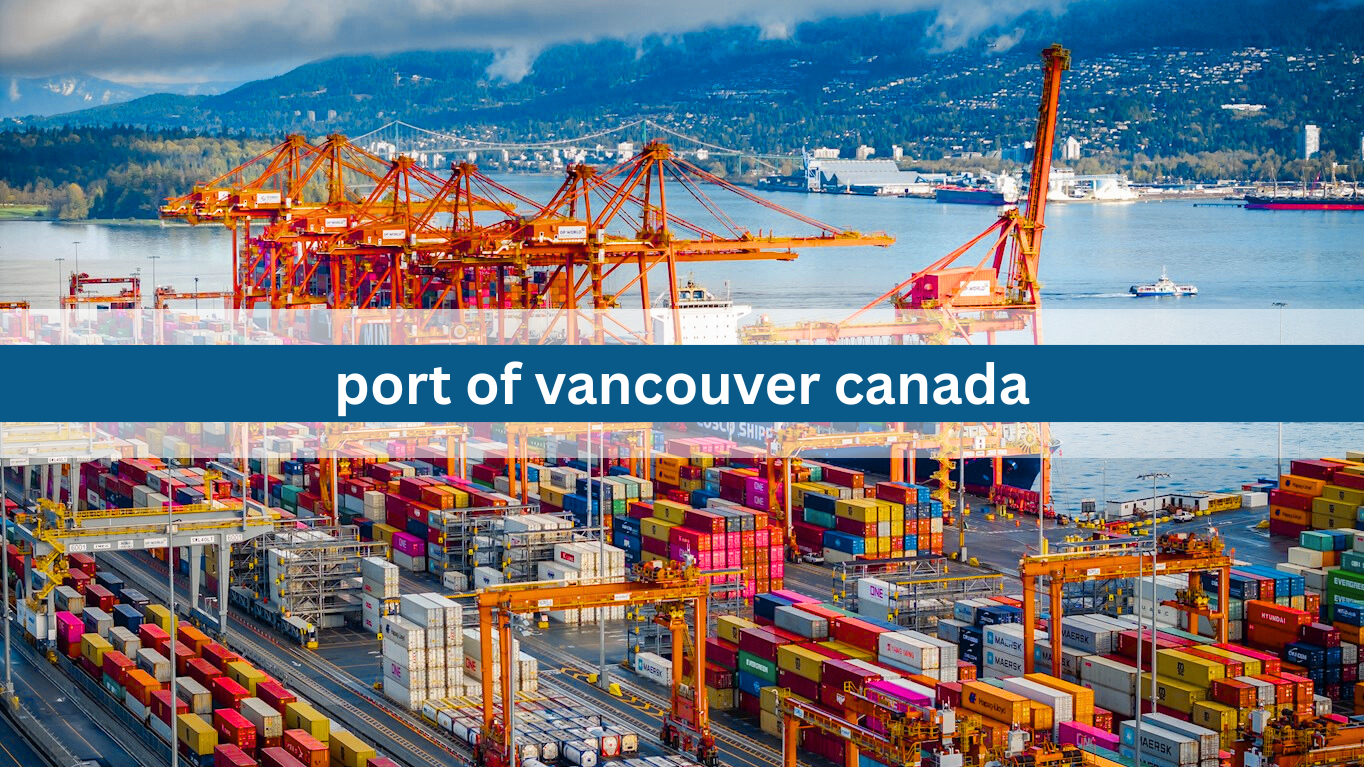
The Port of Vancouver Canada is not just another seaport — it is the largest and most important port in the entire country and a key hub for global trade on the west coast of North America. Every year, the Port of Vancouver Canada handles millions of tonnes of goods, connects Canada to over 170 economies worldwide, and plays a critical role in supporting thousands of jobs. Its operations directly influence Canadian trade, industry, and economic growth.
Located in Vancouver, British Columbia, on the southwest coast, the Port of Vancouver Canada stretches from Roberts Bank along the Fraser River delta up through Burrard Inlet. It includes dozens of terminals, extensive rail connections, and marine facilities that make it the heart of Canada’s Pacific trade network.
The port is much more than a shipping hub; the Port of Vancouver Canada is an essential driver of economic activity, innovation, and global commerce. Let’s explore its operations, history, economic impact, and future plans.
What Is the Port of Vancouver Canada?
The Port of Vancouver Canada is managed by the Vancouver Fraser Port Authority, a federal agency created in 2008 by merging three smaller port authorities. This unification allowed for more efficient operations, improved infrastructure planning, and strategic growth.
It is among the busiest cargo gateways in North America, often ranking third or fourth in total tonnage handled. The Port of Vancouver Canada handles a diverse range of cargo, including containers, bulk commodities, automobiles, breakbulk goods, and cruise passengers.
Containers carry consumer goods, machinery, and electronics from international markets and Canadian exports. Bulk commodities such as coal, grain, potash, and petroleum products make up a significant portion of the port’s trade. The port also handles automobiles imported primarily from Asia and breakbulk cargo like metals, lumber, and steel. Cruise ships dock at Canada Place terminal, welcoming thousands of tourists to the city annually.
Its geographic location provides direct access to Pacific shipping lanes, making the Port of Vancouver Canada strategically vital for trade with Asia, the U.S., and other global markets.
A Historical Snapshot: From Lumber to Global Trade
The roots of the Port of Vancouver Canada trace back to the late 1800s, when the region exported lumber overseas. The arrival of the Canadian Pacific Railway in 1887 and the Panama Canal in 1914 elevated Vancouver’s importance as a shipping hub.
During the 20th century, the Port of Vancouver Canada expanded to handle not just timber and grain but a wide array of cargo types. The 2008 amalgamation into the Vancouver Fraser Port Authority streamlined operations and facilitated long-term planning.
Today, the Port of Vancouver Canada operates container terminals, bulk cargo facilities, and on-dock rail systems, making it one of the most versatile ports in the world. It seamlessly handles cargo from ships to trucks and trains, ensuring efficiency in trade.
| Attribute | Details |
|---|---|
| Name | Port of Vancouver Canada |
| Location | Vancouver, British Columbia, Canada |
| Established | 1890s (modern Vancouver Fraser Port Authority formed in 2008) |
| Type | Major seaport / Cargo and Cruise Terminal |
| Operator | Vancouver Fraser Port Authority |
| Cargo Handled | Containers, Bulk commodities (grain, coal, petroleum), Automobiles, Breakbulk cargo |
| Cruise Operations | Canada Place Terminal |
| Economic Impact | Supports 130,000+ jobs, contributes billions to Canada’s GDP annually |
| Global Reach | Trade with over 170 countries worldwide |
| Sustainability Efforts | Environmental programs, emission reduction initiatives, green port projects |
| Website | www.portvancouver.com |
How the Port of Vancouver Canada Operates
Spread across 29 major marine terminals, the Port of Vancouver Canada functions as Canada’s central hub for international and domestic shipping. It supports five primary sectors:
- Bulk cargo – grain, coal, petroleum products, and other raw materials.
- Container trade – thousands of TEUs (twenty-foot equivalent units) move annually.
- Automobiles and vehicles – nearly all Asian vehicle imports to Canada pass through Vancouver.
- Breakbulk goods – metals, wood, machinery, and industrial materials.
- Cruise operations – serving hundreds of thousands of passengers annually.
The port’s docks, rail lines, and logistics networks connect directly to Canada’s highway and rail systems. This integration ensures smooth transport of goods from ships to inland markets and vice versa, making the Port of Vancouver Canada a critical national logistics hub.
Economic Impact and National Importance
The Port of Vancouver Canada is a major economic engine for Canada. It handles over $200–$300 billion worth of trade annually, supporting more than 130,000 jobs across transportation, logistics, manufacturing, and supply chain sectors. The port contributes billions of dollars to Canada’s GDP each year.
Many industries rely heavily on the Port of Vancouver Canada for global market access — from grain farmers in Western Canada to automotive and energy exporters. Interestingly, almost 80% of the port’s international trade goes to markets outside the United States, highlighting its global significance.
The cruise sector also significantly contributes to the local economy. Tourism spending by passengers and crew adds millions of dollars annually to Vancouver’s hospitality, retail, and service industries.

Record Growth and Continued Expansion
The Port of Vancouver Canada consistently breaks records in cargo handling. In 2024, it moved 158 million metric tonnes of cargo, a 5% increase from 2023, driven by strong performance in container, bulk, and automobile shipments. In the first half of 2025, the port handled 85 million tonnes, including Canadian crude oil, grain, and canola exports.
This continuous growth results from strategic investments in infrastructure, technology, and capacity expansion, ensuring the Port of Vancouver Canada meets the rising global demand for shipping services.
Sustainable Operations and Future Technology
The Vancouver Fraser Port Authority focuses on sustainability, efficiency, and environmental protection. The Port of Vancouver Canada implements digital traffic management systems to optimize ship movements, minimize congestion, and reduce emissions.
Programs such as the Container Capacity Improvement Program (CCIP) aim to expand container handling and increase terminal capacity. These initiatives ensure the Port of Vancouver Canada can accommodate future trade growth while maintaining safety, efficiency, and environmental stewardship.
Challenges and Resilience
Like all global trade hubs, the Port of Vancouver Canada faces challenges. Operations can be affected by geopolitical tensions, extreme weather, climate events, and labor disputes.
However, the Port of Vancouver Canada’s diversification of cargo types, strategic planning, and investments in technology provide resilience. It continues to adapt to changing trade dynamics while maintaining its position as Canada’s leading west coast gateway.
Connecting Canada to the World
The Port of Vancouver Canada connects Canada to over 170 countries. From grains exported to Asia to consumer electronics imported from overseas, the Port of Vancouver Canada plays an essential role in everyday Canadian life.
It is not just a shipping port — it is a gateway to global markets, a driver of economic growth, and a hub for innovation and logistics.
Conclusion
The Port of Vancouver Canada is more than just a series of docks and cranes. It is a thriving international hub fueling Canada’s economy, supporting thousands of jobs, and connecting Canadian businesses to global markets.
From its beginnings in the lumber trade to its modern status as a world-class cargo port, the Port of Vancouver Canada continues to evolve with innovation, strategic planning, and sustainable growth. Its significance to Canada’s prosperity is undeniable — and its role in the future of trade is set to expand even further.
FAQs
Q: What is the Port of Vancouver Canada?
A: The Port of Vancouver Canada is the largest seaport in Canada, handling cargo, containers, automobiles, and cruise ships. It connects Canada to over 170 countries worldwide.
Q: Where is the Port of Vancouver Canada located?
A: It is located in Vancouver, British Columbia, along the Fraser River and Burrard Inlet on Canada’s west coast.
Q: What types of cargo are handled at the Port of Vancouver Canada?
A: The port handles containers, bulk goods like grain and coal, automobiles, breakbulk cargo, and also serves cruise ships.
Q: Who manages the Port of Vancouver Canada?
A: The Vancouver Fraser Port Authority manages the port, overseeing operations, safety, and environmental standards.
Q: Why is the Port of Vancouver Canada important?
A: It supports Canada’s economy by facilitating international trade, creating thousands of jobs, and connecting Canadian businesses to global markets.
