
Introduction to Method Study in Management
Method study in management is a crucial technique used by organizations to improve the way work is performed. It focuses on analyzing current work methods and finding better, faster, and safer ways to complete tasks. The main goal of method study in management is to reduce waste, save time, cut costs, and increase overall productivity. It is part of the broader field of work study, which also includes work measurement. While work measurement focuses on timing tasks, method study in management focuses on improving the way work is done. By using both approaches, companies can achieve higher efficiency and quality.
History and Background of Method Study in Management
The concept of method study in management has its roots in the early 20th century with Frederick W. Taylor, known as the father of scientific management. Taylor emphasized the need to study work scientifically instead of relying on habits or tradition. His ideas laid the foundation for analyzing each step of a task and selecting the most efficient method. Over the decades, method study in management has evolved and is now applied not only in manufacturing but also in offices, hospitals, service industries, and government organizations.
The Concept of Systematic Analysis
At its core, method study in management is a systematic approach that examines every step of a task. Managers observe how work is performed and ask questions like: Is this step necessary? Can it be simplified or combined? Can it be eliminated? By continuously analyzing workflows, method study in management helps reduce unnecessary steps, save time, and make tasks safer and less tiring for employees. It also ensures that resources, including manpower, machines, and materials, are used optimally.
| Profile Detail | Information |
|---|---|
| Topic Name | Method Study in Management |
| Type | Management Technique / Work Improvement Tool |
| Purpose | To improve work efficiency, reduce waste, and optimize processes |
| Developed By | Frederick W. Taylor (early 20th century) |
| Main Components | Method Study (process improvement), Work Measurement (time analysis) |
| Key Techniques | Process Charts, Flow Diagrams, Motion Study, ECRS Principles |
| Applications | Manufacturing, Offices, Healthcare, Service Industry, Government |
| Benefits | Increased productivity, lower costs, better quality, safer workplace, improved employee satisfaction |
| Challenges | Resistance to change, complex processes, lack of data, need for training |
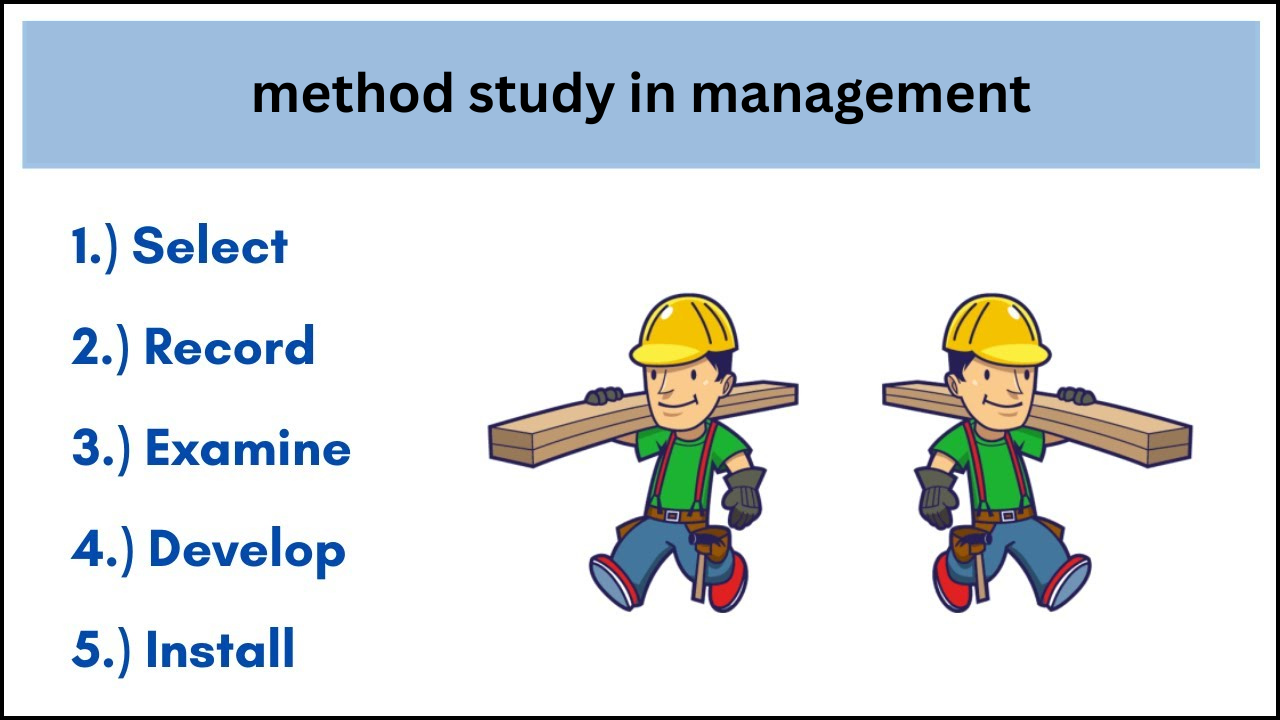
| Implementation Steps | Select work → Record method → Examine → Develop new method → Implement → Maintain |
| Related Concepts | Work Study, Lean Management, Continuous Improvement |
| Relevance Today | Widely used across industries for process optimization and operational efficiency |
| Suggested Resources | Theintactone.com, Vardhaman.org, SugoyaIndia.com |
Steps in Method Study in Management
The process of method study in management begins with selecting the work that needs improvement. Organizations typically focus on tasks that are repeated frequently, costly, or inefficient. Once selected, the current method is documented in detail using tools like process charts or flow diagrams. Recording the existing method is essential because it establishes a baseline to measure improvements.
Next, each step is critically examined. Managers question whether every action adds value. For instance, in a factory, repeated walking to fetch tools may be unnecessary. In an office, redundant paperwork or repeated data entry can be simplified. This phase is key in method study in management, as it identifies hidden inefficiencies.
After inefficiencies are identified, alternative methods are developed. Managers and employees brainstorm to find better ways of performing the same task. The most practical and cost-effective solution is selected. Then, the improved method is implemented. This may involve training employees, adjusting equipment, or reorganizing the workspace. Proper implementation ensures that the benefits of method study in management are realized.
Finally, the new method is maintained and monitored. Regular reviews help ensure compliance and identify additional improvements. By making method study in management an ongoing practice, organizations create a culture of continuous improvement.
Techniques Used in Method Study in Management
Several techniques are used to analyze and improve processes. Process charts record every step, including operations, inspections, and delays. Flow diagrams map the movement of materials or documents to identify unnecessary motions. Motion study, including two-hand charts, examines worker movements to eliminate wasted motion. Principles like Eliminate, Combine, Rearrange, and Simplify (ECRS) guide improvements. Together, these tools make method study in management more effective and precise.
Benefits of Method Study in Management
The advantages of method study in management are significant. Productivity increases as tasks are completed faster and more efficiently. Costs are reduced through better use of materials, time, and labor. Standardizing processes improves quality and reduces errors. Workers experience less fatigue and enjoy safer, more organized workspaces, boosting morale. Companies applying method study in management consistently gain a competitive edge, adapt faster to changes, and provide better products or services to customers.

Applications Across Industries
Method study in management is versatile and can be applied in various sectors. In manufacturing, it streamlines production lines and reduces defects. Hospitals use it to enhance patient flow, minimize waiting times, and improve administrative efficiency. Service industries like banks, hotels, and retail apply it to improve service delivery. Even government offices and educational institutions benefit by standardizing and simplifying administrative tasks. Its adaptability makes method study in management valuable across all industries.
Challenges and Limitations
Despite its benefits, method study in management faces challenges. Employees may resist change, especially if they are accustomed to old methods. Complex processes require careful analysis, coordination, and skilled personnel. Accurate data is essential to identify improvements correctly. Organizations must invest time and training to implement method study in management successfully. Understanding these challenges allows managers to plan more effectively and achieve sustainable results.
Real-World Examples of Method Study in Management
Companies worldwide have benefited from method study in management. Toyota, for example, applies principles of continuous improvement rooted in method study to optimize production. By eliminating waste, standardizing processes, and empowering employees to suggest improvements, Toyota achieves high efficiency. Even small companies see gains by reorganizing workflows, simplifying tasks, and optimizing resources. These examples show that method study in management works across both large and small organizations.
Conclusion
Method study in management is not just a tool; it is a mindset. It encourages employees and managers to ask, “Is there a better way to do this?” By applying this approach consistently, organizations can achieve long-term efficiency, productivity, and quality improvements. Whether in manufacturing, healthcare, service sectors, or administration, method study in management remains an essential practice for modern organizations.
Adopting method study in management goes beyond improving processes—it creates a culture of continuous improvement. Small changes, when consistently applied, result in significant gains over time. Employees are more engaged, resources are used effectively, and customers receive better service. In today’s competitive environment, method study in management is a proven way to enhance performance and ensure long-term success.
FAQs
Q: What is method study in management?
A: Method study in management is a systematic approach to analyze work processes and improve efficiency by reducing waste and simplifying tasks.
Q: Why is method study in management important?
A: It increases productivity, lowers costs, improves quality, and creates safer and more organized workplaces.
Q: Where can method study in management be applied?
A: It can be applied in industries, offices, hospitals, service sectors, and government organizations.
Q: What are the main steps in method study in management?
A: Select the work, record the existing method, examine critically, develop improvements, implement, and maintain the new method.
Q: What challenges exist in method study in management?
A: Resistance to change, complex processes, lack of accurate data, and the need for proper training are common challenges.
