
Effective benchmarking is one of the most powerful tools an organization can use to understand its performance, improve its operations, and stay competitive in a rapidly changing business landscape. Yet, for many professionals and business owners, the concept remains abstract until they see how it works in practice.
In this comprehensive guide, you’ll learn what effective benchmarking really means, how it works, why it matters, and how you can use it to transform your business processes and outcomes.
What Is Benchmarking?
At its core, Effective benchmarking is a structured measurement and comparison process. Businesses use it to evaluate their performance against others — often industry leaders or best‑in‑class organizations — to identify where improvements are possible. It’s not random data comparison; rather, it’s a systematic pursuit of excellence, driven by measurable goals and clear performance criteria.
Benchmarking goes beyond simply “looking at competitors.” It focuses on data‑driven insights that help organizations understand their strengths and weaknesses in areas like productivity, customer satisfaction, product quality, and operational efficiency.
Why Benchmarking Is Important
In today’s competitive business environment, resting on past success isn’t enough. Organizations must continuously adapt and evolve. That’s where effective benchmarking comes in.
Benchmarking helps companies:
- Understand industry standards so they know how they stack up against others.
- Identify performance gaps and opportunities for improvement.
- Drive strategic decisions by relying on evidence rather than guesswork.
- Foster a culture of continuous improvement, which keeps teams focused and motivated.
Without effective benchmarking, organizations risk becoming stagnant — unaware of their competitive position or missing vital opportunities to innovate and grow.
| Category | Details |
|---|---|
| Topic | Effective Benchmarking |
| Definition | A structured process of comparing performance with top performers to improve efficiency, quality, and competitiveness. |
| Purpose | Identify gaps, adopt best practices, and drive continuous business improvement. |
| Benefits | Increased efficiency, cost reduction, enhanced customer satisfaction, strategic growth. |
| Target Audience | Businesses, managers, startups, and professionals seeking performance improvement. |
| Application | Internal processes, competitor analysis, industry-wide best practices. |
Types of Benchmarking
Effective benchmarking isn’t one‑size‑fits‑all. Different types serve different strategic needs.
Internal Benchmarking
This compares performance across teams, departments, or units within the same organization. It’s often the first step because internal data is readily available and helps identify internal best practices.
Competitive Benchmarking
Here, a company evaluates its performance against direct competitors. This type helps reveal strategic gaps and shows how competitors achieve better results in key performance areas.
Functional Benchmarking
This involves comparing similar processes in different industries. For example, a retail company might borrow operational practices from a successful logistics firm. The focus is on function, not industry.
Generic Benchmarking
Generic benchmarking looks at broad processes like customer service, human resources, or technology use that apply across industries. It helps businesses refine universal functions that contribute to overall performance.
Each type of Effective benchmarking reveals different insights and should be selected based on your organization’s specific goals and resources.
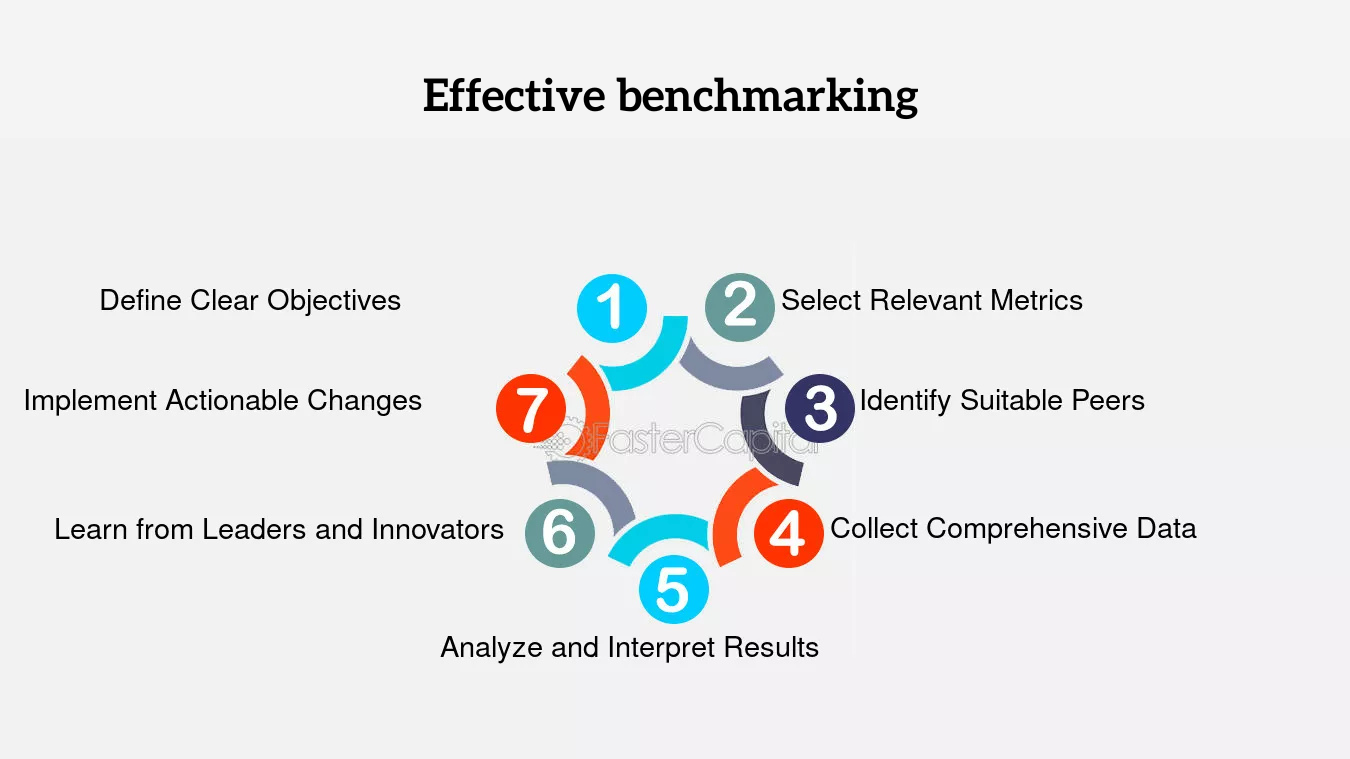
The Effective Benchmarking Process
Effective benchmarking follows a clear, logical process. Here’s how it works in practice:
1. Define Objectives
Before collecting data, decide why you’re benchmarking. Are you improving customer service? Reducing costs? Shortening production time? Setting a clear goal ensures a focused and useful analysis.
2. Choose What to Benchmark
Not all areas of business require benchmarking. Prioritize key functions tied to strategic goals — such as sales performance, production efficiency, or customer satisfaction — to get the most impactful insights.
3. Select Benchmarking Partners
Choose organizations or units that excel in the area you’re studying. These could be competitors, industry leaders, or companies known for best practices.
4. Collect and Analyze Data
This is often the most challenging step. Reliable benchmarking requires accurate and comparable data. Use surveys, performance metrics, industry reports, or process documentation to build a solid data foundation.
5. Develop Action Plans
Once you understand performance gaps, it’s time to act. Create detailed improvement strategies, assign responsibilities, and establish timelines to close those gaps.
6. Implement Improvements
Put your plans into motion. Change management matters here — without proper communication and team alignment, even the best plans can falter.
7. Monitor Progress
Benchmarking isn’t a one‑time project. Continuously measure performance after changes are made to ensure that improvements stick and evolve with the business.
This cycle of measurement, action, and review ensures that benchmarking leads to sustained performance gains.

What Effective Benchmarking Looks Like in Action
Effective benchmarking has helped many organizations achieve tangible improvements. Real‑world success often shows up as gains in:
- Customer satisfaction through process refinement and better service standards.
- Lower operational costs by adopting more efficient production methods.
- Faster project delivery times by learning from competitors’ scheduling techniques.
- Increased retention by evaluating and enhancing employee engagement practices.
Organizations that benchmark effectively don’t just copy others — they learn, adapt, and improve in ways that align with their strategic objectives.
Key Benefits of Effective Benchmarking
When executed well, benchmarking delivers a wide range of benefits:
Increased Efficiency
Benchmarking reveals bottlenecks and inefficiencies that might otherwise go unnoticed, allowing organizations to streamline processes and improve operational flow.
Better Decision‑Making
Data from benchmarking provides a factual basis for decisions, reducing reliance on intuition or guesswork.
Enhanced Innovation
By learning how others solve problems, companies can generate new ideas and approaches that improve their own performance.
Stronger Strategic Goals
Benchmarking helps organizations set realistic and measurable goals that align with industry standards and internal capabilities.
Customer and Market Insight
Understanding how competitors meet customer needs gives companies the insights needed to refine their offerings, pricing, and value propositions.
Continuous Improvement Culture
Benchmarking fosters an environment where performance is regularly evaluated and improved — the hallmark of high‑performing organizations.
Challenges and Pitfalls to Watch For
Even though benchmarking is powerful, it’s not without challenges:
- Data Accuracy Issues — Frequently, data from external sources isn’t fully reliable or directly comparable.
- Misinterpretation of Results — Without careful analysis, benchmarking data can be misleading.
- Resistance to Change — Employees or managers may feel threatened or reluctant to adjust practices.
- Inappropriate Comparisons — Comparing companies with significantly different operations or scales can skew results.
Understanding these pitfalls helps organizations prepare better and implement benchmarking more effectively.
Conclusion
Effective benchmarking isn’t just about comparing numbers — it’s about transforming insights into action.
When done right, it drives improvements in efficiency, quality, strategy, and competitiveness. It provides a roadmap grounded in data and real‑world performance rather than theory. Whether you’re a large enterprise or a growing startup, incorporating benchmarking into your management practice can be a game‑changer.
By focusing on clear objectives, reliable data, thoughtful analysis, and consistent follow‑through, your organization can turn benchmarking into a powerful driver of long‑term success.
FAQs
Q: What is effective benchmarking?
A: Effective benchmarking is a structured process of comparing your business performance with top performers to identify areas for improvement.
Q: Why is benchmarking important for businesses?
A: Benchmarking helps businesses improve efficiency, reduce costs, enhance quality, and stay competitive in their industry.
Q: How often should benchmarking be done?
A: Benchmarking should be an ongoing process, regularly reviewed to track performance and implement continuous improvements.
Q: Can benchmarking work for small businesses?
A: Yes, small businesses can benefit by learning best practices, improving operations, and setting realistic growth goals.
Q: What is the difference between competitive and internal benchmarking?
A: Competitive benchmarking compares your business with competitors, while internal benchmarking evaluates processes within your own organization.
