
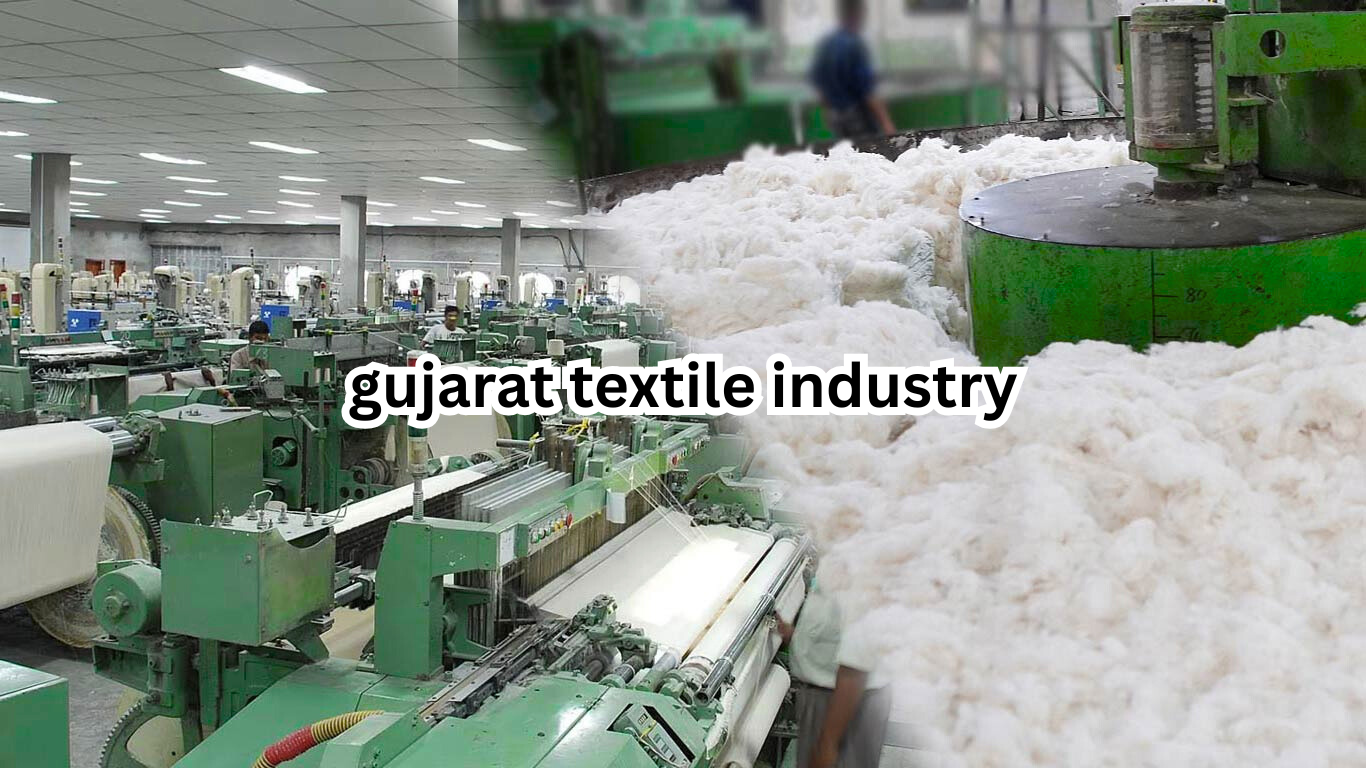
The Gujarat textile industry is one of the most significant and influential textile sectors in India, often called the “Textile Hub of India.” Gujarat has a rich tradition in textiles, ranging from cotton cultivation to modern garment production. The state’s textile industry combines traditional craftsmanship with industrial-scale production, making it a major contributor to India’s economy and exports. Cities like Ahmedabad, Surat, Vadodara, and Rajkot have become centers of textile excellence, with Ahmedabad historically known as the “Manchester of India” because of its early cotton mills. Today, Gujarat continues to maintain a strong reputation in cotton textiles, denim production, synthetic fabrics, and traditional artisanal crafts.
Raw Material Advantage: Cotton and Beyond
One of the major advantages of Gujarat textile industry is its abundant supply of raw cotton. Gujarat has consistently been one of India’s top cotton-producing states. In 2023–24 alone, the state produced over 90 lakh bales of cotton, which fuels both domestic and international textile production. This availability of raw material allows the state to efficiently run its mills and factories while maintaining competitive production costs. Beyond cotton, Gujarat is also renowned for its denim production, often referred to as the “Denim Capital of India.” The state produces raw and processed denim that is used by garment manufacturers across India and exported worldwide. Additionally, Gujarat has expanded into synthetic fabrics, man-made fibres, technical textiles, and value-added products, ensuring a diversified and resilient textile economy.
Major Textile Hubs in Gujarat
The Gujarat textile industry is supported by a network of cities, each contributing uniquely. Ahmedabad remains a historic center for cotton textiles and denim, continuing its legacy of spinning, weaving, and processing. Surat, on the other hand, has emerged as a dynamic hub for synthetic fabrics, man-made fibre production, and ready-made garment fabrics. Smaller cities and towns like Rajkot and Vadodara support specialized weaving, handloom production, and textile processing. This distribution of production centers allows Gujarat to operate a highly integrated textile ecosystem, combining traditional techniques with modern technology.
Textile Products of Gujarat
Gujarat produces a wide array of textile products. Cotton fabrics such as broadloom, shirting, and basic cloth remain core products, while denim production caters to both domestic and export markets. Synthetic and blended fabrics, including polyester and viscose, are produced primarily in Surat. The state has also invested in technical textiles, producing fabrics for industrial, medical, and commercial use. Gujarat is a center for finished garments and apparel fabrics, supplying raw and processed materials to clothing manufacturers. At the same time, traditional textiles such as Bandhani, Patola, and Ajrakh printing preserve the state’s artisanal heritage, showcasing the balance between modern industry and cultural preservation.
| Attribute | Details |
|---|---|
| Name | Gujarat Textile Industry |
| Industry Type | Textile Manufacturing & Processing |
| Established | Early 19th century (industrial cotton mills in Ahmedabad) |
| Major Products | Cotton fabrics, denim, synthetic fabrics, ready-made garments, traditional crafts (Bandhani, Patola, Ajrakh) |
| Key Cities | Ahmedabad, Surat, Vadodara, Rajkot |
| Raw Material | Cotton, synthetic fibers, silk, wool |
| Workforce | Millions (farmers, mill workers, artisans, skilled technicians) |
| Export Destinations | USA, UK, Europe, Middle East |
| Special Titles | “Textile Hub of India”, “Denim Capital of India”, “Manchester of India” (Ahmedabad) |
| Economic Contribution | Major contributor to Gujarat’s GDP and India’s textile exports |
| Modern Advancements | Technical textiles, eco-friendly processing, automated mills |
| Challenges | Global competition, modernization, skilled labor shortage, environmental sustainability |
| Cultural Significance | Preservation of traditional crafts alongside industrial production |
| Official Website/Resources | Gujarat Textile Policy & Info |
Economic Impact: Employment and Exports
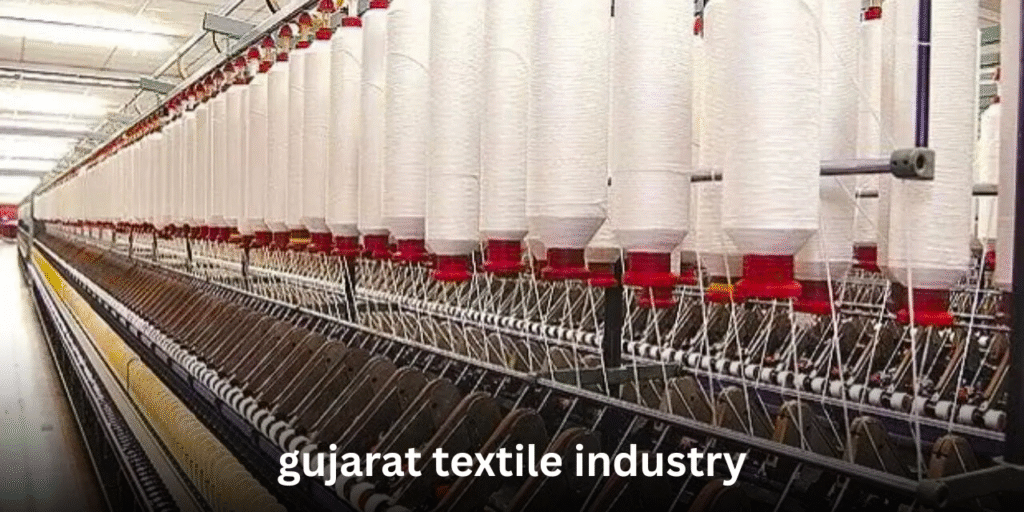
The Gujarat textile industry has a significant economic impact. It is one of India’s top textile exporters, contributing billions in export revenue. The state’s textile exports include cotton fabrics, denim, synthetic textiles, and ready-made garments, reaching markets in the United States, Europe, and the Middle East. The industry also provides employment to millions, from farmers growing cotton to skilled workers in mills, weavers in handloom units, and technicians in modern factories. Industrial infrastructure, including spinning mills, dyeing and processing units, power looms, and garment factories, further strengthens the industry, making Gujarat a preferred destination for textile investment.
Strengths That Make Gujarat Unique
Several factors give Gujarat textile industry a unique position in India’s textile landscape. Its access to raw materials ensures consistent production, while diversified textile segments reduce dependency on any single market. Industrial infrastructure supports efficient production, and a focus on export markets drives quality and innovation. Furthermore, Gujarat successfully blends traditional crafts with modern industrial processes, allowing hand-woven and artisanal textiles to coexist with mass-produced fabrics. The state’s strong orientation toward innovation, investment in modern machinery, and focus on quality ensures it remains competitive globally.
Challenges and Future Prospects
Despite its strengths, the Gujarat textile industry faces certain challenges. Competition from other textile hubs in India and abroad requires continuous innovation and cost management. Small-scale and older units may struggle to modernize, affecting overall productivity and quality. The industry also needs skilled labor to operate advanced machinery and produce technical textiles. Environmental sustainability is another concern, as textile processing, dyeing, and synthetic fibre production can impact local ecosystems. Balancing industrial growth with eco-friendly practices has become essential to meet domestic regulations and international buyer expectations.
Cultural Significance and Legacy
The importance of Gujarat textile industry extends beyond economic output. It plays a vital role in preserving India’s cultural heritage, with traditional crafts like Bandhani, Patola, and Ajrakh printing attracting domestic and international attention. The industry supports livelihoods across the spectrum, providing employment to rural and urban populations, unskilled and skilled workers, and artisans alike. Gujarat’s textiles also contribute significantly to India’s foreign exchange earnings, making the state a critical player in the national economy. Its diverse production capacity, from raw cotton to high-value garments and technical textiles, ensures the state can meet both domestic and global demand efficiently.
Conclusion
The Gujarat textile industry is not just a legacy of India’s cotton and fabric production—it is a modern, dynamic, and resilient sector. With a strong foundation in raw materials, diverse production, skilled workforce, and export orientation, it contributes significantly to India’s economy, employment, and cultural heritage. By balancing traditional crafts with modern industrial processes and expanding into synthetic and technical textiles, Gujarat continues to weave a story of innovation, sustainability, and global relevance, making it one of the most influential textile industries in India and the world.
FAQs
Q: What makes Gujarat a leader in India’s textile industry?
A: The Gujarat textile industry leads due to high cotton production, strong infrastructure, and skilled workforce.
Q: Which cities in Gujarat are famous for textiles?
A: Ahmedabad, Surat, Vadodara, and Rajkot are top hubs in the Gujarat textile industry.
Q: What are the main textile products of Gujarat?
A: The Gujarat textile industry produces cotton, denim, synthetic fabrics, garments, and traditional crafts.
Q: How does the textile industry impact Gujarat’s economy?
A: The Gujarat textile industry boosts exports, provides jobs, and supports both urban and rural livelihoods.
Q: What challenges does the Gujarat textile industry face?
A: The Gujarat textile industry faces modernization issues, global competition, and environmental sustainability concerns.
