
On 14 October 1956, a remarkable event unfolded in Nagpur that would change the lives of hundreds of thousands forever. On that day, B. R. Ambedkar, along with a massive gathering of followers, embraced Buddhism — rejecting an oppressive caste‑based system and affirming dignity, equality, and social justice. This day is celebrated every year as Dhamma Chakra Pravartan Din (sometimes spelled “Dhammachakra Anuvartan Din” / “Din”). Wikipedia+2deekshabhoomi.org+2
The term itself carries deep symbolism: Dhamma (the teaching of Buddha), Chakra (wheel, meaning the wheel of law or dharma), Pravartan (propagation or turning), and Din (day). Together, the phrase conveys “The Day of Propagating the Wheel of Dhamma.” On that October morning, what turned was not merely a religious conversion — but a collective turning of social destiny for many.
For millions — historically persecuted and marginalized under the caste system — that day offered a new identity, new hope, and new dignity.
Why Ambedkar Chose Buddhism
Ambedkar was born into a society where caste and “untouchability” were harsh realities. His own experiences shaped his lifelong commitment to social justice, dignity, and equality for oppressed communities. Over decades, he studied various religions and social philosophies, seeking a path that would uplift the downtrodden without prejudice or ritualistic hierarchy. Velivada+2culturalsamvaad.com+2
As early as 1935, in a public gathering, he declared his intention: though born a Hindu, he would “not die a Hindu.” Velivada+1
In Buddhism — especially the form he sought to embrace — Ambedkar found equality, rationality, morality, and human dignity. To him, Buddhism was not just another religion, but a philosophy of humanism and social justice, devoid of caste discrimination or hierarchical oppression. Nagvanshi Ngo+2Nagvanshi Ngo+2
This vision led him to craft a version of Buddhism oriented toward social reform — known as Navayana Buddhism (“New Vehicle” Buddhism) — a reinterpretation designed to meet the needs of oppressed communities in 20th‑century India. IJAR Scholarly Research Journals+2culturalsamvaad.com+2
The Historic Conversion: 14 October 1956, Nagpur
The location for this monumental event was chosen with deep symbolism: Deekshabhoomi, in Nagpur. The site is believed to have historic Buddhist links through the “Nag” people and early Buddhist history in the region. deekshabhoomi.org+2Mid-day+2
On the morning of 14 October 1956 — coinciding with the Hindu festival of Vijayadashami (also known as Ashok Vijayadashami) — the grand ceremony started. Between about 9 and 11 a.m., Ambedkar and his wife took refuge under the “Three Jewels” of Buddhism (Buddha, Dhamma, Sangha) and accepted the “Five Precepts.” Then Ambedkar administered a set of 22 Vows he had composed, rejecting the caste‑based Hindu social order, the worship of Hindu deities, caste rituals, and committing to equality, morality, compassion, and a new social dignity. Nagvanshi Ngo+3Round Table India+3Wikipedia+3
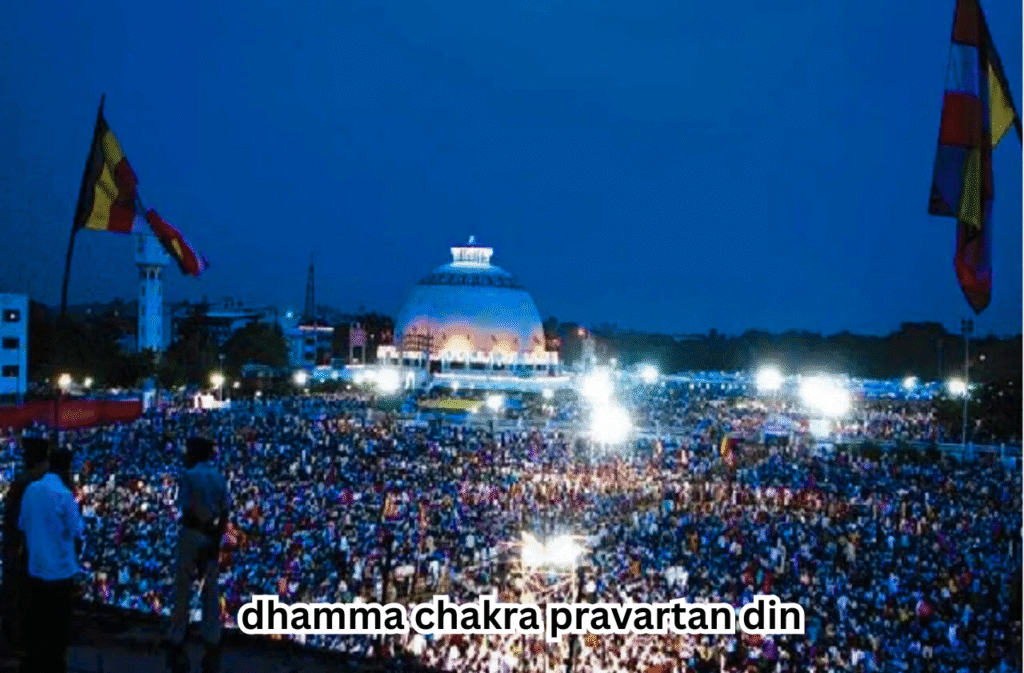
What followed was one of the largest peaceful mass religious conversions in modern history — roughly 365,000 to 400,000 people (from oppressed caste backgrounds) accepted the vows and embraced Buddhism that day. Different sources estimate even higher, and several accounts say more followers joined on the next day (15 October), bringing the total to over half a million. Wikipedia+3Free Press Journal+3Nagvanshi Ngo+3
Witnesses described the scene as one of hopeful energy and spiritual solemnity — a ground strewn with white cloths, Buddhist flags fluttering, and the air filled with chants and prayers. Round Table India+2Nagvanshi Ngo+2
Thus, with that ceremony, the “wheel of Dhamma” was set rolling again — not only for a spiritual rebirth but for a sociocultural revolution.
| Attribute | Details |
|---|---|
| Full Name | Bhimrao Ramji Ambedkar |
| Also Known As | Babasaheb Ambedkar |
| Date of Birth | 14 April 1891 |
| Place of Birth | Mhow, Central Provinces, British India (now Madhya Pradesh, India) |
| Date of Death | 6 December 1956 |
| Age at Death | 65 years |
| Height | Approx. 5 ft 8 in (173 cm) |
| Family | Father: Ramji Maloji Sakpal, Mother: Bhimabai Murbadkar; Spouse: Savita Ambedkar |
| Education | Columbia University (USA), London School of Economics (UK), University of Bombay |
| Profession | Lawyer, Economist, Social Reformer, Politician |
| Net Worth | Not publicly documented; lived a life devoted to social reform |
| Physical Appearance | Slim build, wore traditional Indian attire; often seen with spectacles |
| Major Achievement | Architect of the Indian Constitution, leader of Dalit rights movement, Promoter of Buddhism |
| Famous For | Leading the Dhamma Chakra Pravartan Din mass conversion to Buddhism in 1956 |
| Social Media | N/A (historical figure) |
| Legacy | Navayana Buddhism, Dalit empowerment, social equality, Deekshabhoomi memorial in Nagpur |
The 22 Vows: What Converts Committed To
The 22 Vows are central to the significance of Dhamma Chakra Pravartan Din. They were not traditional monastic vows — but written by Ambedkar specifically for this moment, combining ethical, social, and spiritual commitments. Wikipedia+2Nagvanshi Ngo+2
Among the vows:
- Renouncing faith in Hindu deities like Brahma, Vishnu, Shiva, Rama, Krishna, Ganapati, etc., and rejecting worship or rituals associated with them. OpIndia+2culturalsamvaad.com+2
- Rejecting caste-based rituals, Pind‑daan (rites for dead ancestors), and ceremonies by Brahmins. OpIndia+2Nagvanshi Ngo+2
- Commitment to the core ethical teachings of Buddhism: the Noble Eightfold Path, compassion and loving‑kindness toward all beings, truthfulness, non‑violence, abstaining from intoxicants, abstaining from lying or stealing, sexual morality. OpIndia+2IJAR Scholarly Research Journals+2
- Belief in human equality, striving to establish equality, and rejecting social hierarchies. OpIndia+2Nagvanshi Ngo+2
- Commitment to lead life according to Buddha’s Dhamma — a complete social, moral, and spiritual transformation from the previous identity. Wikipedia+2culturalsamvaad.com+2
These vows made the conversion not mere ritual but a pledge — a new birth into a life anchored in dignity, justice, equality, and compassion.
Significance: More Than Religion
Dhamma Chakra Pravartan Din is not just a religious milestone — it is a profound act of social liberation.
For decades, communities considered “untouchable” or “depressed classes” in the traditional caste hierarchy suffered oppression, humiliation, exclusion — denied basic rights and dignity. The conversion in 1956 offered them not only a new religion but a new identity: as equals, as humans worthy of respect, as dignified members of society. Nagvanshi Ngo+2Nagvanshi Ngo+2
Beyond individual dignity, the event represented a collective challenge to centuries-old caste oppression. By rejecting Hindu ritualism, caste gods, and caste-based social norms, Ambedkar and his followers asserted — loudly and publicly — their right to self-respect, human rights, and social equality. Round Table India+2culturalsamvaad.com+2
This shift also had political implications. The emergence of Navayana Buddhism under Ambedkar — with its emphasis on rationality, humanism, and social justice — offered a new ideological framework for oppressed communities. It became not just a religion, but a movement for social change. IJAR Scholarly Research Journals+2culturalsamvaad.com+2
On a spiritual level, many found in Buddhism a path that aligned with their values: compassion, equality, honesty, and non‑violence — values that transcended caste, creed, or social status.
Thus, Dhamma Chakra Pravartan Din stands at the crossroads of religion, social justice, identity, and human dignity.
Deekshabhoomi: Monument of Memory
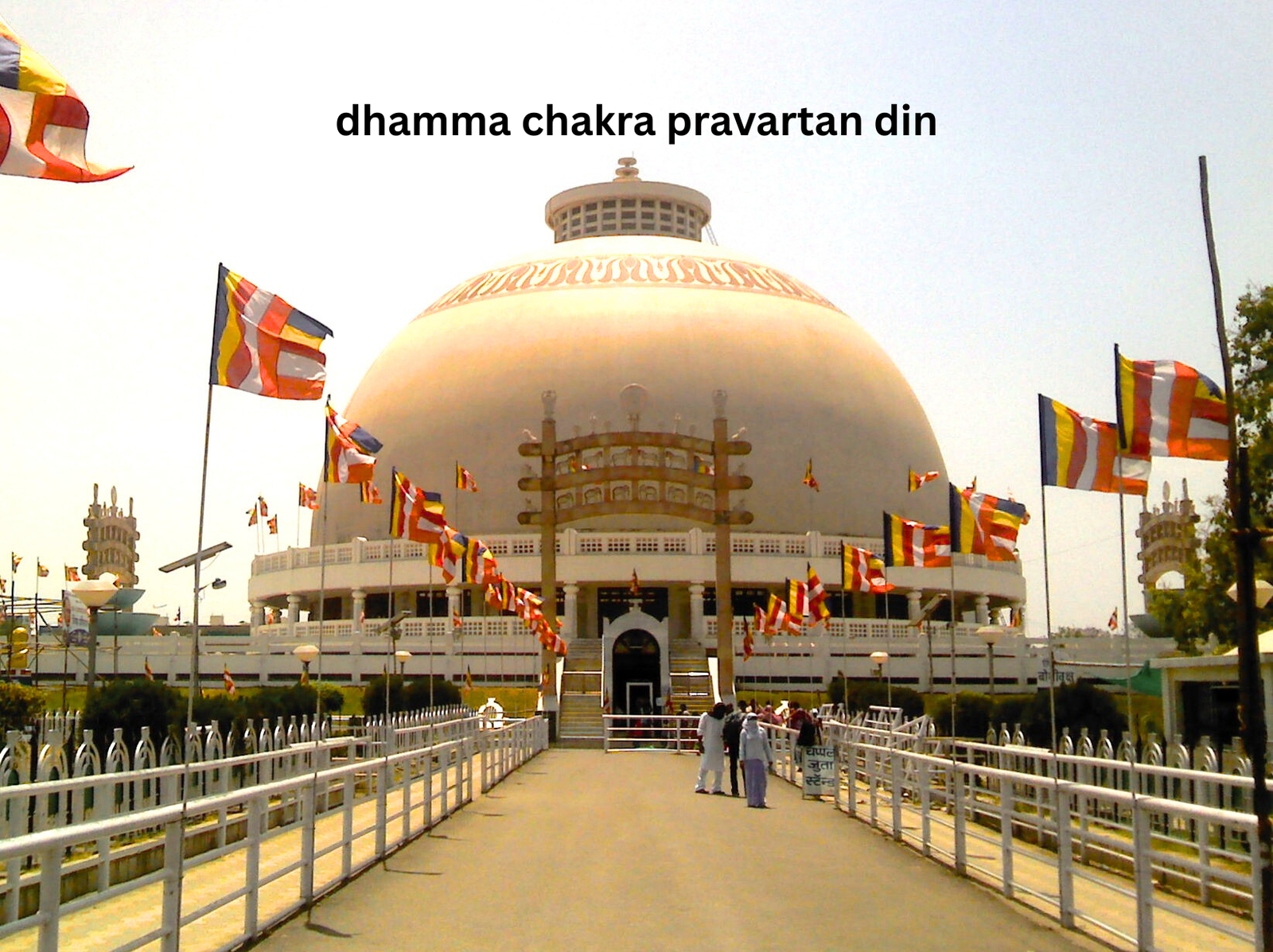
The site of the conversion in Nagpur — where thousands gathered — came to be revered as Deekshabhoomi (“land of initiation”). Wikipedia+2culturalsamvaad.com+2
After Ambedkar’s death (on 6 December 1956, just weeks after the conversion) Wikipedia+1, his followers established a memorial committee. Eventually they built a magnificent stupa — a white‑domed structure, inspired by ancient Buddhist stupas, designed to hold meditation halls and host large gatherings — as a tribute to that seminal moment. Nagvanshi Ngo+2culturalsamvaad.com+2
Today, Deekshabhoomi stands as a powerful symbol: of rebirth, of dignity restored, of social equality. Every year on Dhamma Chakra Pravartan Din, thousands of Buddhists — especially from communities inspired by Ambedkar — congregate there to celebrate, reflect, pray, chant, meditate, and renew their commitment to the values enshrined in the 22 vows. The Hitavada+2Nagvanshi Ngo+2
The aura of the place, the stupa, the flags, the gatherings — they all remind visitors and devotees of the power of peaceful transformation, collective resolve, and spiritual dignity.
Why This Day Still Matters
Even today — decades later — Dhamma Chakra Pravartan Din remains deeply relevant, especially in a society where caste discrimination, social inequality, and injustice continue to plague many lives.
For marginalized communities, this day is a reminder: that identity is not given by birth, caste, or social hierarchy — but can be reclaimed through dignity, self-respect, and collective solidarity.
The 22 vows — though formulated in 1956 — continue to serve as a moral and ethical guide for many who embrace Buddhism inspired by Ambedkar: equality, compassion, non‑violence, honesty, and human dignity.
The revival of Buddhism as Navayana under Ambedkar also offers an alternative worldview: one that blends spiritual living with social consciousness, morality with justice, and humanism with identity.
Moreover, as new generations grow up hearing the story of that great conversion — they learn that faith can be a tool for empowerment, that religion can be a force for social justice rather than oppression, and that historical injustices can be challenged with dignity and solidarity.
The Human Story Behind the History
While dates, numbers, vows and monuments tell the structural story — the heart of Dhamma Chakra Pravartan Din lies in the human lives transformed.
Imagine thousands of people — oppressed, excluded, denied dignity — standing together in a field in Nagpur on 14 October 1956; hearing the oath of equality, compassion, and moral living; feeling for the first time that their suffering has a name, their identity has worth, their life has dignity.
For many, that was more than spiritual conversion — it was a rebirth. For their children, a chance at dignity. For their communities, a path toward equality.
For Ambedkar, who endured injustice but rose to lead a movement for social reform, it was fulfillment of his lifelong struggle. His decision, his courage, his vision — gave hope to millions.
Decades later, even as the world changed, the human values enshrined on that day remain relevant. The struggle for social equality, human dignity, and justice still continues — and for many, Dhamma Chakra Pravartan Din is not just a remembrance, but a living promise.
A Living Legacy
Dhamma Chakra Pravartan Din is more than a historical event. It is a living legacy — renewed every year in the hearts of those who gather at Deekshabhoomi, in the vows they recite, and in the lives they live.
It stands as testament to the power of collective resolve, moral courage, human dignity, and peaceful transformation.
In remembering it, we do not only honor the past — we renew a promise for the future: that no person is lesser because of their birth; that equality, dignity, compassion, and justice belong to every human being.
On 14 October each year, when flags flutter and monks chant and people bow in solidarity — the wheel of Dhamma turns again. And with it, hope.
Conclusion
Dhamma Chakra Pravartan Din is far more than a historical date on the calendar; it is a celebration of courage, equality, and human dignity. On 14 October 1956, when Dr. B.R. Ambedkar led hundreds of thousands to embrace Buddhism, he not only initiated a spiritual journey but also ignited a social revolution. The event symbolized the breaking of centuries-old chains of caste oppression and the reclamation of identity, respect, and freedom for millions.
The day reminds us that faith, when guided by morality, compassion, and justice, can empower individuals and communities alike. Through the Twenty-two Vows and the principles of Navayana Buddhism, Ambedkar created a roadmap for living a life rooted in equality, rationality, and social responsibility.
Even today, Dhamma Chakra Pravartan Din resonates deeply — at Deekshabhoomi in Nagpur and across India — inspiring generations to uphold human dignity, challenge injustice, and cultivate compassion. It is a living testament to the power of conscious choice, collective action, and the enduring human quest for justice and spiritual freedom.
In essence, Dhamma Chakra Pravartan Din is not just a commemoration of the past; it is a beacon of hope for the future, reminding all of us that through courage, knowledge, and compassion, society can transform, and every individual can claim their rightful dignity.
FAQs
Q: What is Dhamma Chakra Pravartan Din?
A: Dhamma Chakra Pravartan Din is the historic day when Dr. B.R. Ambedkar embraced Buddhism with thousands of followers.
Q: When is Dhamma Chakra Pravartan Din celebrated?
A: Dhamma Chakra Pravartan Din is celebrated annually on 14 October.
Q: Why is Dhamma Chakra Pravartan Din important?
A: Dhamma Chakra Pravartan Din is important for promoting equality, human dignity, and social justice.
Q: Where did the historic conversion of Dhamma Chakra Pravartan Din take place?
A: The historic conversion of Dhamma Chakra Pravartan Din took place at Deekshabhoomi, Nagpur.
Q: What are the 22 Vows of Dhamma Chakra Pravartan Din?
A: The 22 Vows of Dhamma Chakra Pravartan Din guide followers to reject casteism and follow Buddhist principles.
